
- Introduction
Most people toss lemons into a plastic bag, place them somewhere in the refrigerator, and assume they are being stored properly. Then, a week or two later, the skin looks dull, the fruit feels strangely soft, and mold may begin appearing around the stem.Get Organic Produce
There is a better way to think about lemon storage.
Instead of leaving whole lemons exposed to the dry, circulating air of the refrigerator, some home cooks store them submerged in water inside a tightly sealed container. The idea is remarkably simple: keep the lemons surrounded by moisture and reduce their exposure to the refrigerator’s dehydrating environment.
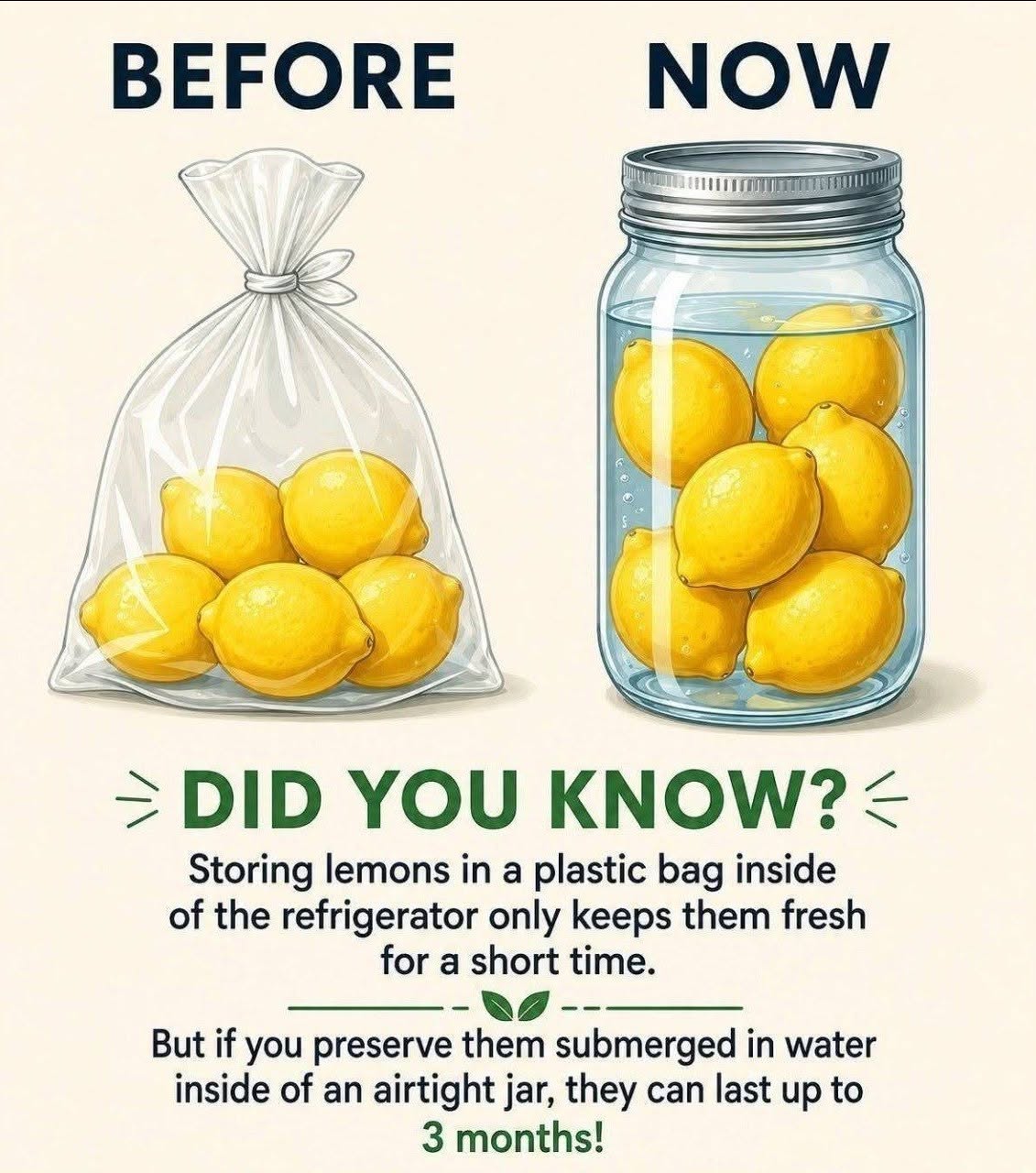
Before: lemons sitting loose or inside a plastic bag, gradually losing moisture and freshness.
After: whole lemons kept in a sealed jar filled with water and refrigerated.
When stored properly and checked regularly, this method may help whole lemons remain firm and usable considerably longer than they typically would when stored loosely in the refrigerator.
- The Problem With Plastic Bags
Plastic bags seem like an obvious storage solution. They are inexpensive, convenient, and already sitting in most kitchens.
The problem is that a sealed plastic bag can create a humid microenvironment around the fruit. Moisture released from the lemons has nowhere to escape, and condensation can accumulate inside the bag. If the fruit has any damaged areas, that persistent moisture can create conditions that encourage mold.
Discover more
food
Download Nature Guides
Refrigerator
Lemons also continue their natural respiration after harvest. They release gases, including carbon dioxide and small amounts of ethylene. In a poorly ventilated storage environment, gases and moisture can accumulate around the fruit rather than dissipating.
There is another issue that is easy to overlook: dehydration.
Refrigerator air is relatively dry, and whole lemons can gradually lose water through their peel. As that happens, the fruit becomes less plump and the skin can turn wrinkled or leathery. A lemon may still be usable, but it is no longer at its best.
Under ordinary refrigerator storage, whole lemons often remain in good condition for roughly one to two weeks, although actual longevity depends on freshness, temperature, humidity, and the condition of the fruit when purchased.
So the plastic bag isn’t necessarily the villain. The bigger issue is uncontrolled moisture combined with limited ventilation and the refrigerator’s naturally desiccating environment.
- The Better Method: Submerge Lemons in Water
One alternative is surprisingly old-fashioned in principle: keep the fruit surrounded by water.Order Water Delivery
The technique requires only three things:
Whole lemons
A clean, airtight refrigerator-safe jar or container
Clean, preferably filtered water
The lemons are placed inside the container and completely covered with water. The container is then sealed and refrigerated.
Discover more
Test Water Quality
Refrigerators
cooking
Why might this work?
A lemon’s peel naturally helps protect the interior fruit, but moisture can still gradually escape from the surface. Submerging the fruit creates a consistently hydrated environment around the peel, which can reduce the rapid moisture loss associated with exposure to cold, dry refrigerator air.
The water also separates much of the lemon’s surface from direct contact with circulating refrigerator air. It does not create a completely oxygen-free environment, but it changes the storage conditions considerably.
Some people report keeping lemons this way for several weeks or even approaching three months. However, that should be treated as a possible upper range rather than a guarantee. The starting freshness of the lemons, refrigerator temperature, cleanliness of the container, and regular inspection all matter.
The goal isn’t simply to make a lemon last forever.
The goal is to preserve firmness and usefulness for longer.
- Step-by-Step Instructions
see continuation on next page
For Complete Cooking STEPS Please Head On Over To Next Page Or Open button (>)
- Step-by-Step Instructions
Step 1: Wash the Lemons
Start with fresh, undamaged lemons.
Rinse them thoroughly under cool running water and gently rub the surface to remove dirt or residue. Drying them completely isn’t essential for this method because they will be submerged, but the container itself should be thoroughly clean.
Avoid storing lemons that already have visible mold, significant bruising, leaking juice, or broken skin. Water will not reverse deterioration that has already begun.
Step 2: Choose the Right Jar
Select a clean glass jar or food-safe airtight container large enough to hold the lemons without crushing them.
A container that is too small can make the lemons difficult to remove and may cause unnecessary pressure against the peel. A container that is excessively large, meanwhile, requires more water than necessary.
A snug arrangement is ideal.
Leave enough room for the lemons to move slightly and for water to circulate around them.
Step 3: Add the Water
Place the whole lemons inside the container.
Fill it with clean, cool water until the lemons are completely submerged. If the lemons float, gently position them so that as much of their surface as practical remains beneath the water.
Filtered water can be used if preferred.
Then seal the container tightly.
Step 4: Refrigerate
Place the sealed jar in the refrigerator.
Keeping the temperature consistently cold is important. The refrigerator should be operating at a safe food-storage temperature, ideally around 40°F (4°C) or below.
Avoid repeatedly leaving the jar on the counter for extended periods. Temperature fluctuations can undermine the purpose of refrigerated storage.
Step 5: Inspect the Lemons Regularly
This is the step that should never be skipped.
Check the lemons periodically for unusual softness, discoloration, unpleasant odors, slime, or visible mold. If one lemon begins deteriorating, remove it rather than allowing it to remain in the container with the others.
For an optional maintenance step, the water can be replaced every one to two weeks. Use a clean container and fresh water when doing so.
The method is simple, but cleanliness matters.
- Bonus Tips for Keeping Lemons Fresh
How to Tell If a Lemon Has Gone Bad
Fresh lemons should generally feel firm and have a fresh citrus aroma.
Warning signs include:
Fuzzy or spreading mold
A strong fermented or unpleasant smell
Excessive softness
Slimy or unusually sticky skin
Major darkened or decaying areas
Juice leaking from damaged portions
A little wrinkling does not automatically mean a lemon is spoiled. It usually indicates moisture loss. However, when mold or significant decay appears, it is safer to discard the affected lemon.
Do not simply cut away visible mold and assume the rest is safe. Mold can extend beyond what is immediately visible, particularly in soft or damaged food.
Try Freezing Lemon Juice
If you have more lemons than you can use, freezing is another practical solution.
Juice the lemons and pour the juice into ice cube trays. Once frozen, transfer the cubes to a freezer-safe container or bag.
Each cube becomes a convenient portion for sauces, marinades, tea, dressings, cocktails, or recipes that call for a small amount of fresh lemon juice.
Freeze the Zest Too
Lemon zest contains fragrant oils that can add a remarkable amount of citrus character to food.
Grate the zest before freezing the lemon or before it becomes too dry. Store the zest in a tightly sealed freezer container and use small portions whenever needed.
It works particularly well in cakes, cookies, muffins, glazes, pasta dishes, roasted vegetables, and homemade dressings.
Wrap Individual Lemons in Foil
For a simpler alternative, individual lemons can be wrapped in aluminum foil and refrigerated.
The wrapping helps reduce direct exposure to refrigerator air and can slow moisture loss. It is not as convenient as a jar for storing several lemons together, but it requires no special container.
Best Uses for Long-Stored Lemons
see continuation on next page
For Complete Cooking STEPS Please Head On Over To Next Page Or Open button (>)
Best Uses for Long-Stored Lemons
Once the lemons remain firm, fragrant, and free from spoilage, they can be used in countless everyday recipes.
Try them in:
Fresh lemonade
Lemon vinaigrette
Garlic-lemon chicken
Lemon pasta
Homemade lemon curd
Lemon cakes and muffins
Fish marinades
Roasted vegetables
Tea and infused water
Lemon-garlic sauces
A lemon that has been sitting in the refrigerator doesn’t have to become forgotten produce. With a little planning, it can become the ingredient that brightens an otherwise ordinary meal.
- Conclusion
The difference between wasted lemons and useful lemons can sometimes come down to something as mundane as how they are stored.
Leaving lemons loosely exposed in the refrigerator can allow them to gradually lose moisture, wrinkle, and deteriorate. A sealed container filled with water creates a very different storage environment, helping reduce dehydration and potentially extending the useful life of fresh whole lemons.
The method is inexpensive. There is no complicated equipment and no elaborate preparation.
Wash the lemons, place them in a clean airtight container, cover them with water, seal the container, and refrigerate. Then inspect them regularly and replace the water periodically if desired.
Just remember that the oft-repeated three-month figure is not a guarantee. Freshness and food safety should always take priority over squeezing extra days out of produce.
Give the method a try with your next batch of lemons. Compare one batch stored conventionally with another stored in water and see which stays firmer and fresher in your own refrigerator.
And once those lemons are ready to use, put them to work in a batch of homemade lemonade, a bright lemon cake, a simple vinaigrette, or any recipe where fresh citrus can make the whole dish taste more alive.
For Complete Cooking STEPS Please Head On Over To Next Page Or Open button (>)
