
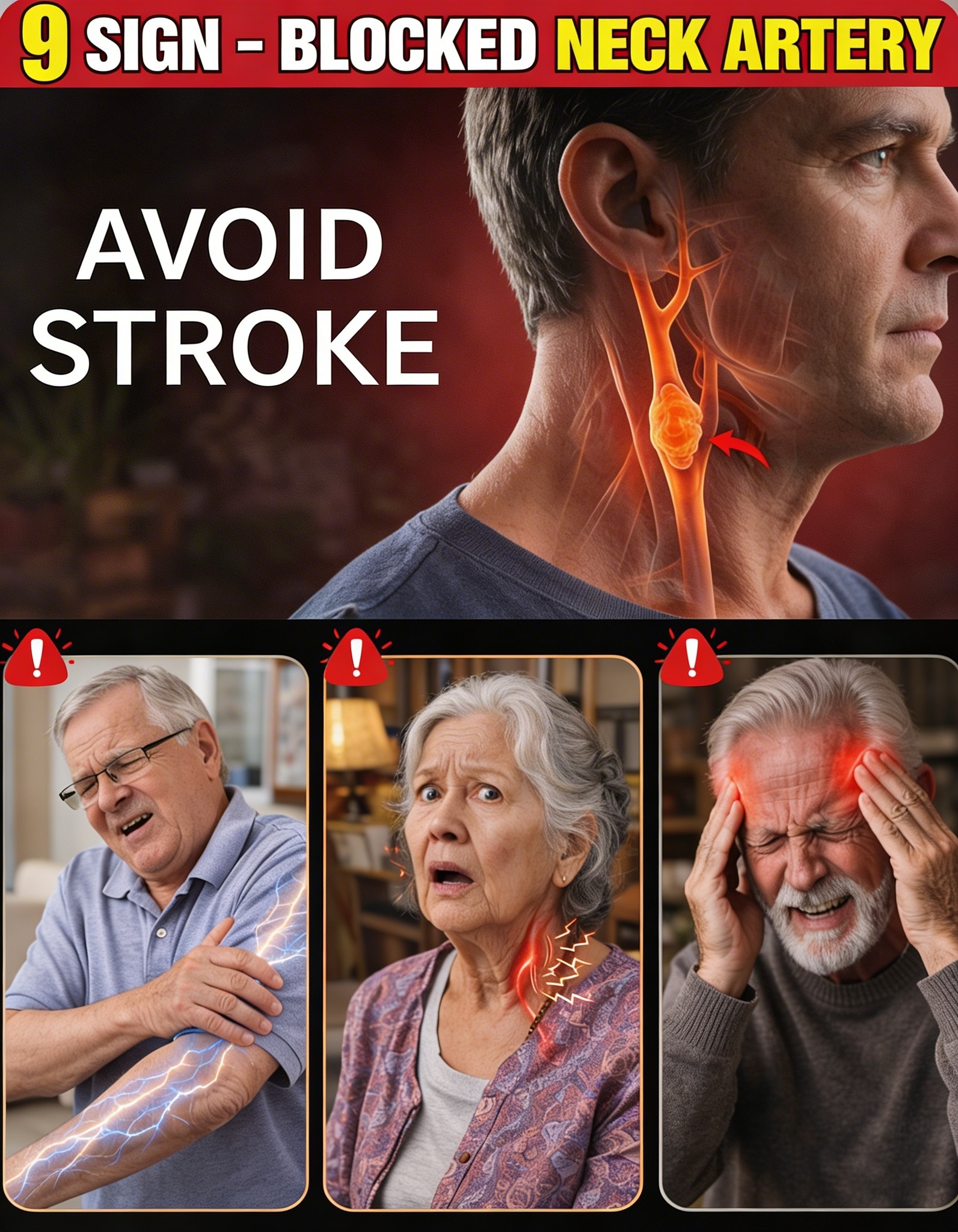
Blocked carotid arteries often develop quietly for years. Many people over 50 feel perfectly fine until a sudden, frightening event reveals how serious the situation has become. Up to 15–20% of ischemic strokes in the United States are linked to carotid artery disease, and research shows that a large percentage of individuals with significant narrowing experience no clear warning until a mini-stroke or full stroke occurs. The truly concerning part is how easily these early signals can be mistaken for normal aging, stress, or minor issues. What if some of the small, fleeting changes you’ve noticed lately are actually your body’s way of asking for help before it’s too late?

Why Carotid Artery Blockage Is Called a “Silent” Danger
The carotid arteries run along both sides of your neck, carrying oxygen-rich blood directly to your brain. When plaque slowly builds inside these vital vessels, the channel narrows and blood flow becomes restricted. Reduced flow can starve brain tissue of oxygen and increase the chance of small clots breaking off and traveling deeper into the brain.
What makes this condition particularly dangerous is the absence of dramatic symptoms in most cases. Many people discover serious narrowing only after experiencing a transient ischemic attack (TIA) or a completed stroke. Studies estimate that 60% or more of individuals with moderate to severe blockage report no obvious signs until an emergency event happens.
The good news is that certain subtle changes can serve as early clues. Recognizing them early gives you time to speak with a healthcare provider and discuss appropriate screening or lifestyle adjustments. Let’s look at the nine warning signs experts urge people to take seriously.
Warning Sign 1: Brief Vision Loss in One EyeOne of the most specific early signs is a sudden, temporary loss of vision in just one eye. People often describe it as a gray curtain or dark shade coming down over the eye for a few seconds to a few minutes before disappearing completely.
This phenomenon, known as amaurosis fugax, occurs when a small piece of plaque temporarily blocks blood flow to the retina. The same type of debris could later travel to the brain. Even when vision returns to normal, doctors consider this a serious warning that deserves prompt evaluation.
Warning Sign 2: Sudden One-Sided Weakness or Numbness
If your arm, leg, or face suddenly feels weak, heavy, or numb on only one side of the body—even for a short time—it may signal reduced blood flow through a carotid artery.
Because nerve pathways cross over in the brainstem, a blockage on the left side of the neck typically affects the right side of the body, and vice versa. The American Stroke Association emphasizes that any sudden unilateral weakness should be treated as urgent, even if the sensation disappears quickly.
Warning Sign 3: Temporary Trouble Speaking or Understanding

Suddenly struggling to find words, slurring speech, mixing up sentences, or having difficulty understanding what others are saying can be alarming—and important.
These language changes usually affect the left hemisphere of the brain, which relies on steady blood supply through the carotid system. When flow is briefly interrupted, transient speech or comprehension problems may appear. Many people later realize these episodes were early red flags.
Warning Sign 4: Severe or Unusual Headaches (Especially #5)
A sudden, unusually intense headache—particularly one that feels different from any previous headache—deserves attention. Some describe it as a “thunderclap” or the worst pain they’ve ever experienced.
New-onset severe headaches appear in a notable portion of people with advanced carotid narrowing and can signal unstable plaque, vessel wall changes, or critical restriction. Because headaches are so common, this sign is frequently overlooked until more serious events follow.
Warning Sign 5: Unexplained Dizziness or Balance Problems
Feeling like the room is spinning, losing balance without warning, or staggering for no clear reason can indicate that overall brain blood flow is compromised.
While dizziness has many possible causes, new or worsening episodes in older adults—especially when combined with other signs—warrant careful evaluation. Persistent or recurrent balance issues should never be automatically blamed on aging or inner-ear problems.
Warning Sign 6: A Pulsing or Whooshing Sound in One Ear
Some people begin hearing a rhythmic whooshing, pulsing, or swishing noise in one ear that matches their heartbeat. This sound (called a bruit) can become more noticeable when lying down or in quiet environments.
The noise is created by turbulent blood flowing through a narrowed section of the artery. While only a doctor can confirm it with a stethoscope, if you notice this pattern yourself, mention it during your next medical visit.
Warning Sign 7: Sudden Memory or Concentration Difficulty
Rapid-onset confusion, trouble remembering recent events, or unusual difficulty concentrating can sometimes relate to reduced blood supply to the brain.
Because the brain consumes a large amount of oxygen, even brief shortages can affect cognitive function first. Many people with carotid narrowing perform worse on memory and thinking tests compared with those who have clear vessels.
Warning Sign 8: Brief Facial Drooping
A sudden droop on one side of the face, an uneven smile, or one eyelid appearing lower than the other is a classic warning. This is part of the widely taught FAST criteria (Face, Arms, Speech, Time).
Even when the drooping resolves quickly, it represents a medical urgency that should never be ignored.
Warning Sign 9: Repeated Mini-Episodes That Resolve
Perhaps the most important overall pattern is having multiple brief episodes of any of the above symptoms that come and go. Each episode that resolves on its own is frequently called a “warning stroke” or TIA.
Research shows that people who experience a TIA have a significantly elevated risk of full stroke in the following days and weeks. The more episodes, the more important it becomes to investigate promptly.
Simple Steps You Can Take Right NowWhile only a healthcare provider can determine the right course of action, here are practical steps many people discuss with their doctors:
- Schedule a check-up if you’ve noticed any of these signs, even briefly
- Ask about a carotid ultrasound (a painless, non-invasive imaging test)
- Monitor blood pressure regularly at home
- Follow a Mediterranean-style eating pattern rich in vegetables, fruits, whole grains, fish, nuts, and olive oil
- Aim for at least 150 minutes of moderate activity most weeks
- Avoid tobacco in all forms
- Keep blood sugar and cholesterol levels in healthy ranges through lifestyle and any prescribed medication
Quick Reference: Common Risk Factors & Protective Habits
- High blood pressure → Daily monitoring + medication if prescribed
- Elevated cholesterol → Diet changes + possible medication
- Smoking → Quitting dramatically lowers vascular risk
- Physical inactivity → Regular movement improves circulation
- Poor dietary pattern → More plants, healthy fats, fewer processed foods
Final Thoughts
Your brain depends on steady, unobstructed blood flow through the carotid arteries. Many of the earliest warning signs are subtle, brief, and easy to dismiss. Yet paying attention to these quiet messages can open the door to timely conversations with your doctor, appropriate screening, and meaningful lifestyle adjustments.
You’ve already taken an important step by reading this far. If any of these signs feel familiar—even faintly—consider making that appointment this week. Early awareness truly matters.
Frequently Asked Questions
Can blocked carotid arteries cause symptoms on both sides of the body?
Usually not. Because each carotid artery primarily supplies one side of the brain, symptoms typically appear on the opposite side of the body. Bilateral symptoms more commonly point to other causes.
Is a carotid ultrasound painful or dangerous?
No. It’s a simple, painless scan using sound waves. No radiation, needles, or contrast dye is involved for a standard carotid ultrasound.
How often should someone over 50 get checked for carotid artery health?
There is no universal screening recommendation for everyone without symptoms or risk factors. However, people with multiple risk factors or any of the warning signs listed above should speak with their doctor about whether screening is appropriate for them.
