
Puzzle solving has long been a well-known and traditional activity that captivates attention and sparks lively discussions. These mysterious questions have a unique power to test our intellectual abilities, stimulate our minds, and infuse our daily lives with a gentle sense of well-being. For those seeking a creative challenge, a mental workout, or simply light entertainment, the world of puzzles offers an experience of unparalleled richness and satisfaction.
As proof, riddles have persisted since the dawn of time; their ability to intrigue the human mind is truly fascinating. These puzzles, whether the ancient Sphinx riddles or the contemporary enigmas that are all the rage on the internet, uniquely exploit our natural interest in searching for answers and solving puzzles.

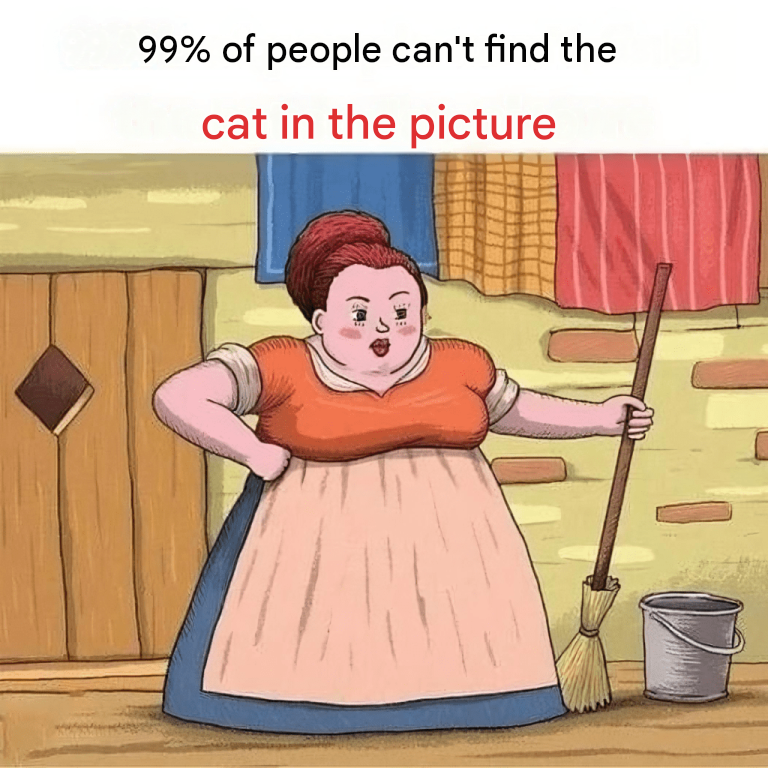
The “find the cat in the picture” game has become incredibly popular and is all over the internet. In this deceptively simple game, players must find a cat hidden in a noisy environment, relying on their keen sense of observation and meticulousness. Even if the solution isn’t always obvious, the satisfaction of finally finding the hidden cat is doubly rewarding.
The ability to meticulously analyze the image, searching for the slightest detail or unusual element that might reveal the cat’s hiding place, is essential to solving this kind of puzzle. With a keen eye and a little patience, the cat will eventually appear, giving the finder a sense of accomplishment and a clear understanding of the importance of observation.
However, solving puzzles offers numerous benefits that far exceed the fleeting pleasure it provides. Studies have shown that regularly solving puzzles and riddles significantly improves memory, sharpens problem-solving skills, and can even enhance mood and cognitive performance. Engaging in mental exercises can help us avoid boredom and potentially strengthen our mental acuity and resilience.

Working together to solve a problem can also be an excellent way to build relationships and spark interesting conversations. Faced with a complex challenge, individuals are often led to debate their viewpoints, consider alternative strategies, and ultimately collaborate to find a solution. This atmosphere of cooperation can stimulate original thinking, offer new perspectives on each other’s approaches to problem-solving, and create lasting memories of shared successes.
Even though solving some puzzles may seem difficult at first, the resulting satisfaction is often worth the effort. The secret to excelling at puzzle-solving lies in perseverance and the joy of exploration. By approaching each problem with curiosity and an open mind, we can sharpen our cognitive abilities and experience the pure joy of problem-solving.
