
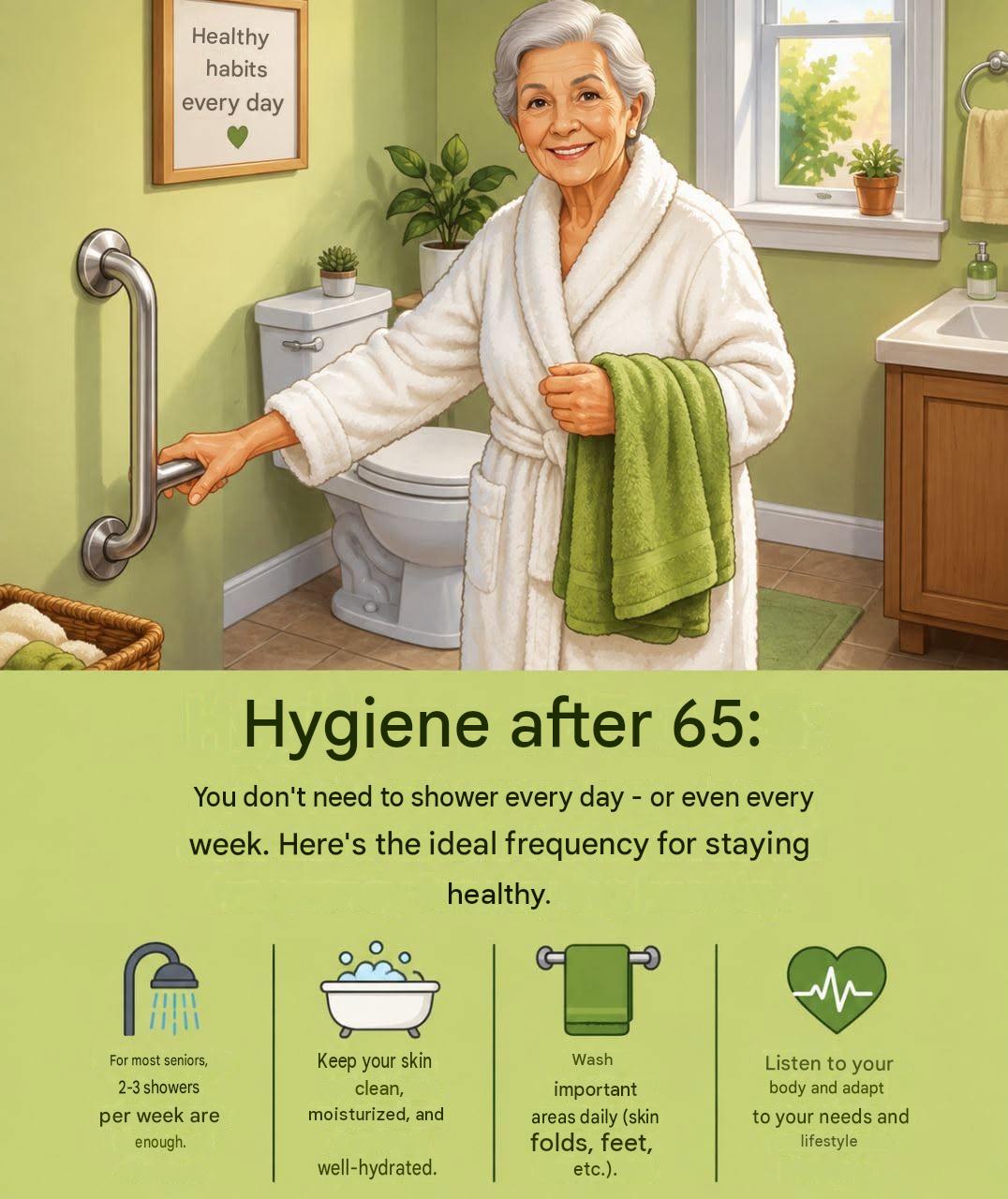
Our skin naturally changes as we age. It can become thinner, drier, and more sensitive, which means that a hygiene routine that worked years ago may not always be the most comfortable option today.
So how often should you shower after age 65? The answer may be more flexible than you think.
For many older adults, showering every day is not a necessity. The most important thing is to keep the body clean, protect the skin barrier, and adapt the routine to activity level, climate, and personal needs.
Why your skin changes as you age
Aging skin tends to produce less natural sebum. As a result, frequent hot showers and strong soaps can sometimes leave your skin feeling tight, itchy, or excessively dry.
This doesn’t mean that hygiene is less important. It just means that gentler hygiene can be more beneficial for mature skin.
A good routine should focus on cleanliness without unnecessarily stripping the skin of its natural moisture.
How often should you shower?
There is no one ideal schedule for everyone.
For some people, showering a few times a week can be perfectly reasonable, especially if they don’t sweat heavily or get particularly dirty during the day.
However, the frequency may vary depending on:
Physical activity and sweating
Hot or humid weather
Work or outdoor activitiesSkin type and sensitivity
Incontinence or other personal care needs
Medical or dermatological advice
Instead of focusing only on the number of showers, think about overall cleanliness and comfort.
Daily hygiene is still important.
Even if you don’t shower completely every day, some areas benefit from regular cleaning.
Pay special attention to areas such as:
Armpit
Groin and genital area
Feet
Skin folds
Face and hands
You can incorporate a quick wash of these areas into your daily routine if a thorough shower is not necessary.
Protect your skin while showering
Your showering habits can surprisingly affect how your skin feels after showering.
1. Choose warm water.
Very hot water can contribute to dryness and irritation. Try using comfortably warm water instead.
2. Keep your showers reasonably short.
Long, hot showers can be relaxing, but they can be drying for mature skin. A shorter shower can often meet your needs without overexposing yourself to water and heat.
3. Use a gentle cleanser.
If your skin is easily irritated, avoid harsh products. For sensitive skin, a gentle, unscented cleanser may be a better choice.
You don’t necessarily have to aggressively scrub every part of your body.
4. Moisturize your skin after washing.
One of the simplest tips for senior skin care is to moisturize it after bathing.
Gently pat your skin dry, rather than rubbing it vigorously, and then apply moisturizer while your skin is still slightly damp. This can help reduce moisture loss and keep your skin in a comfortable condition.
Don’t forget about shower safety.
For adults over 65, hygiene isn’t just about clean skin. Bathroom safety is also important.
Wet floors can be slippery and getting in or out of the shower can sometimes be challenging.
Consider practical safety measures, such as:
Installing fixed handrails
Using non-slip flooring or mats
Keep frequently used items within easy reachImproving bathroom lighting
Using a shower chair if necessary
Avoiding rushing to or from the shower
If you have balance or mobility concerns, increasing bathroom safety may be just as important as changing your bathing routine.
What about washing your hair?
Hair doesn’t necessarily need to be washed every day.
How often you shampoo your hair depends on factors such as hair texture, scalp oiliness, hairstyle, activity level, and personal preference.
If your scalp is dry or irritated, it may be a good idea to wash it less often and choose a gentle shampoo.
A simple hygiene routine for older adults
A practical routine could look something like this:
Every day:
Wash your hands, face, and areas that sweat or require care.
Several times a week:
Take a thorough shower or bath, depending on your personal needs and lifestyle.
After sweating or getting dirty:
Clean your body as needed instead of waiting for a scheduled shower.
After bath:
Gently pat dry and moisturize dry areas.
The goal isn’t to follow a strict rule. It’s about creating a routine that keeps you clean, comfortable, and confident while protecting your skin.
When should you consult a healthcare professional?
If you experience persistent itching, unusual rashes, painful or cracked skin, sores, swelling, or signs of infection, don’t assume the problem is simply due to your bathing frequency.
A healthcare professional can help determine the underlying cause and recommend appropriate care.
People with specific health or skin problems may also need an individualized bathing routine.
Frequently Asked Questions
Is showering every day bad after age 65?
Not necessarily. Some older adults can shower daily without any problems. However, frequent hot showers or harsh cleansers can contribute to dry or irritated skin, so a gentler approach may be more comfortable.
How often should seniors shower?
There is no universal number. A few showers a week may be enough for some people, while others may need to bathe more often depending on activity, sweating, climate, and personal care needs.
Should older people moisturize after showering?
Yes, moisturizing after bathing can help promote comfortable and hydrated skin, especially if it becomes drier with age.
Is hot water good for dry skin?
Very hot water can make dryness worse for some people. Warm water is generally a gentler choice.
What’s more important than shower frequency?
Cleanliness, skin health, comfort, and safety. A good hygiene routine should fit a person’s lifestyle and individual needs, rather than following a strict rule.
Final Thoughts
Getting older doesn’t mean giving up on good hygiene. It simply means learning to care for your body in a way that respects the changes that come with age.
Gentle showering, regular washing of important areas, hydration, and good bathroom hygiene can all contribute to everyday comfort and a sense of well-being.
So instead of asking, “Do I have to shower every day?” a better question might be, “What hygiene routine keeps me clean, comfortable, and kind to my skin?”
Sometimes taking better care of yourself isn’t about doing more—it’s about doing what your body really needs.
